
Granite or Wood Kitchen Island Worktop: What to Consider Before You Buy
⏱ Estimated reading time: 9 minutes
Granite or wood: which kitchen-island worktop is right for you?
Choosing between a granite and a wood kitchen-island worktop is not simply a choice between two materials. At Oakavia, we believe the better decision starts with the complete island: its base colour, dimensions, storage, mobility, seating provision and the care information supplied for that exact product.
A granite-topped island can create a defined focal point, particularly when a dark worktop contrasts with a pale base. A wooden or butcher’s-block top can bring a warmer, more furniture-led feel and may suit a smaller, more mobile island. Neither option is automatically right for every kitchen, so we recommend comparing specific designs rather than relying on a material label alone.
Our kitchen-island collection includes granite-worktop islands, butcher’s-block designs, breakfast-bar options and related bar stools. Browse Oakavia’s kitchen-island range to compare different worktop styles and colour combinations. Before ordering, check the individual island’s current dimensions, specification, price, availability and delivery information.
In this guide, we explain the practical questions we would ask before choosing a worktop for our own kitchen. The aim is not to declare a universal winner. It is to help you shortlist an island that looks right, works hard enough for your routine and comes with the practical details you need.
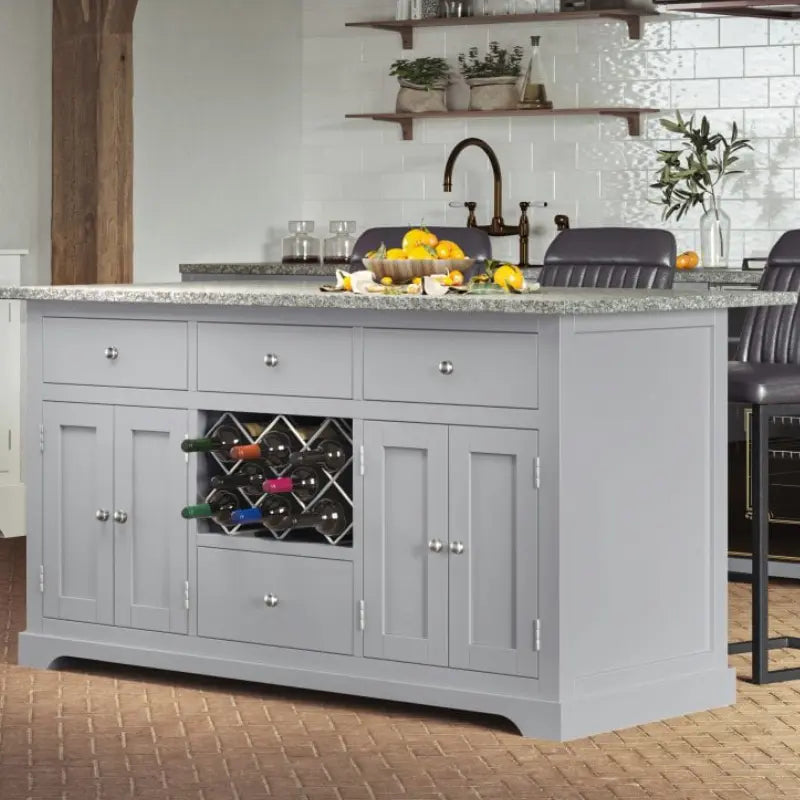
Grey Kitchen Island With Grey Granite Worktop - Oakavia
Start with the look you want in the kitchen
The most useful way to compare granite and wood is to consider how the island relates to the rest of the room. Look at the cabinetry, flooring, splashback, dining table, lighting, handles and any bar stools already in place. The surface that looks most attractive in isolation is not necessarily the one that will give the whole kitchen the most balanced finish.
A pale top with pale cabinetry can create a calm, coordinated appearance. A black or dark granite top against a light base creates a stronger visual break and makes the island feel more prominent. A grey worktop sits between those approaches, although the result will change according to the surrounding colours and the amount of natural light in the room.
The different Oakavia designs show why the complete colour combination matters. A white island with a black granite worktop reads very differently from a grey island with a grey granite worktop, even though both belong to the granite-worktop category. If your kitchen already contains several strong finishes, a quieter combination may feel more considered. If the room is mainly light and neutral, a contrasting top can give the island a clear centre point.
Wood introduces texture and warmth rather than only colour. Our butcher’s-block islands pair a wood surface with painted bases, including blue and cream options. The painted base sets the mood, while the top provides a natural-looking counterpoint. When comparing images, assess the whole item from several angles and imagine it beside your own cupboard fronts rather than judging the worktop as a close-up sample.

It is also worth deciding whether you want the island to blend into the kitchen or behave more like a piece of freestanding furniture. Granite can make the island feel more architectural and defined; a butcher’s-block top can soften a painted base. These are styling considerations, not guarantees, so compare the photographs with your own room measurements before making your final choice.
Compare the worktop with the colours, finishes and furniture already shaping your kitchen.
Think about how you will use the island every day
Your intended use should influence the shortlist as much as the finish. An island may need to support preparation, storage, serving, informal dining, entertaining or a combination of these activities. The worktop material alone does not tell you whether the complete product will perform well for your routine.
For a substantial storage-led option, our Grey Kitchen Island With Grey Granite Worktop is H87 x W160 x D80cm. It has three drawers at the top, a lower drawer, two cupboards with removable shelves and two wine racks that hold 16 bottles in total. The top can sit centrally or with a 19cm overhang on one side for breakfast-bar use.
That combination makes it relevant if your looking for preparation space, enclosed storage and the possibility of informal seating. It does not remove the need to measure your own room. Mark the full footprint on the floor and measure the proposed stool position, including the space needed to sit down, stand up and move behind the seat.
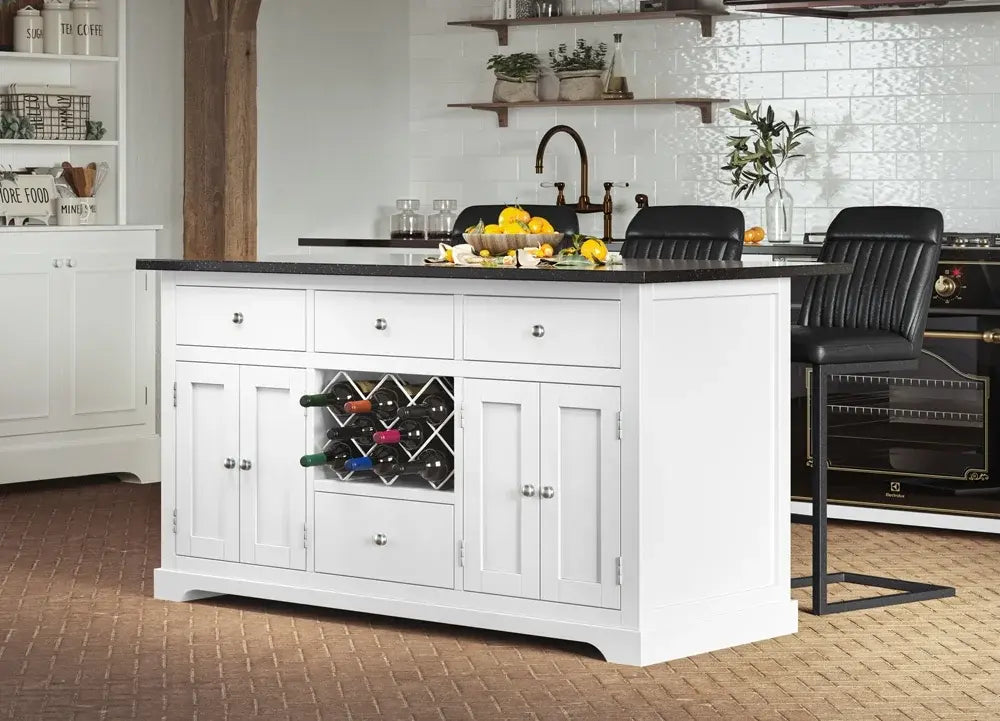
White Kitchen Island With Black Granite Worktop - Oakavia
Our White Kitchen Island With Black Granite Worktop is also H87 x W160 x D80cm. It has three upper drawers, two cupboards with removable shelves, two wine racks and the same 19cm overhang option. It is a useful example of why the base and worktop should be judged together rather than choosing “granite” as a standalone category.

Kitchen Island (Oak) Two Drawer With Black Granite Top - Oakavia
If floor space is tighter, our Kitchen Island (Oak) Two Drawer With Black Granite Top has a footprint of H90 x W95 x D60cm. It has braked wheels, two exposed dovetail-joined drawers on each side and two open storage shelves. That creates a compact granite-top comparison, but you should still check the available clearance around the island before treating a smaller footprint as an automatic fit.

Kitchen Island (Blue) with Butchers Block - Oakavia
For a wood-surface comparison, our Kitchen Island (Blue) with Butchers Block is H90 x W110 x D65cm. It has a butcher’s-block top, braked wheels, drawers that extend through the island and storage cupboards. Its dimensions and mobility make it a different proposition from the larger granite examples, so compare it against your preparation, storage and circulation needs rather than against the worktop alone.
Check the island’s dimensions, storage and stated features against the way you use your kitchen every day.
Compare cleaning and care questions before you choose
It is tempting to make the decision using a simple maintenance assumption: granite is easier, or wood is more demanding. We would not recommend choosing on that basis without checking the care information for the exact island. Granite and wood should not be judged by a blanket assumption about heat resistance, stain resistance, durability or maintenance.
For that reason, follow the care instructions supplied for the specific island you are considering. Check which cleaning products and methods are recommended, whether any products should be avoided and whether the guidance applies specifically to the worktop rather than to the painted or timber base.
Your routine matters too. A household that mainly uses an island for serving and casual dining may ask different questions from one that uses it for frequent preparation. Consider what is likely to land on the surface, how quickly you normally clean up and whether the island will be used by children or guests. Then look for product-specific guidance instead of filling the gaps with general material stereotypes.
We also recommend keeping the product instructions after purchase. If the island includes moving parts, shelves, wheels or an overhang arrangement, the care and assembly information can help you use those features as intended. If a detail is not confirmed, treat it as a question to resolve before ordering rather than making an assumption from a photograph.
Use the care guidance for the exact product rather than relying on general assumptions about granite or wood.
Consider visual weight and the relationship with the room
Worktop colour can affect how substantial an island feels visually, although the result depends on the complete design and the room around it. A dark top on a light base can create a strong outline. A similarly toned top and base may read as a more continuous block. A wood surface can soften a painted base, while a contrasting granite surface can make the island feel more clearly defined.
Think about what the island faces as well as what surrounds it. In an open-plan room, one side may be visible from the dining or living area, so the base, storage openings, worktop edge and any stools all contribute to the view. In a narrower kitchen, a visually substantial island may feel more dominant than it does in a wide, open room.
Scale the island against the features that will remain around it. Measure the clearance to cupboard doors, appliances, walkways and entrances. Check whether drawers can open fully without colliding with another unit. If an overhang or breakfast-bar arrangement is stated, measure the proposed seating position rather than assuming that any stool will fit comfortably.
Compare the island from the main viewpoints in the room: standing at the entrance, looking towards the cooking area, sitting at the dining table and viewing the space from an adjoining room. This simple exercise often reveals whether a contrasting granite top will provide welcome definition or whether the room would benefit from a quieter, warmer wood surface.
Visual balance depends on the complete island and the room around it, not on the worktop material alone.
Worktop, storage and seating: check the whole product
A worktop decision should not distract from the practical specification of the island. For each island you are considering, check the external height, width and depth, the worktop material and finish, the storage arrangement and whether drawers, cupboards or shelves open from one side or both sides.
- Storage: note the number and type of drawers, cupboards, shelves and racks, and check whether shelves are removable or adjustable.
- Mobility: check whether the island has wheels and whether they are braked.
- Seating: confirm that an overhang or breakfast-bar arrangement is specifically stated; do not infer seating provision from a product image alone.
- Dimensions: compare the full H x W x D measurements with your room, appliance doors, cupboard openings and circulation routes.
- Care: read the product-specific instructions and check that they suit the way you expect to use the surface.
- Availability: recheck the current price, stock message and delivery information immediately before ordering because these details can change.
Oakavia’s kitchen-island range includes granite-worktop islands, butcher’s-block islands, breakfast-bar options and related bar stools. Oakavia offers kitchen islands for a range of spaces, from cosy UK flats to spacious open-plan homes. That broad range is useful for comparison, but the correct choice still depends on the dimensions and layout of your own kitchen.
Delivery options include 7–10 day delivery on selected islands, alongside UK mainland delivery options. Delivery terms, prices and stock can change, so check the latest details before ordering.
Before buying, review the worktop, storage, mobility, seating details and dimensions together.
Which option is right for you?
A granite-topped island may be the right choice when the verified colour combination, dimensions and storage arrangement suit the room you are creating. A wood-topped or butcher’s-block option may be the better choice when its warmer finish, smaller footprint or mobility is a closer match for your kitchen and daily routine.
If you are undecided, compare four specific designs: a coordinated granite option, a higher-contrast granite option, a compact granite island and a wood-surface alternative. This creates a focused shortlist without forcing repetitive colour variants into the decision.
At Oakavia, we would frame the final question like this: does the exact island give you the appearance, specification and practical fit you need, with the important details clear before you buy? If the answer is yes, the worktop choice becomes much clearer.
Compare Oakavia kitchen islands by worktop, storage and style
The right choice is the exact kitchen island that fits your room, routine and requirements with clearly supported product details.
Frequently Asked Questions (FAQs)
Q: How do I compare granite and wood kitchen-island worktops?
A: Start with the overall kitchen scheme, then compare the exact product’s worktop wording, dimensions, storage, stated use and care guidance. Avoid assuming that either material is automatically better for every household. The most useful comparison is between specific islands and your own room, routine and expectations.
Q: Does the worktop choice affect storage or seating use?
A: The material itself does not tell you what the whole island provides. Check the individual product for drawers, cupboards, shelves, overhangs and any stated breakfast-bar arrangement. Measure your room and proposed seating position separately, including the space needed when stools are occupied.
Q: What should I check before buying a kitchen island?
A: Check the worktop and finish, external dimensions, storage arrangement, availability, current price, delivery information, imagery and care guidance. If an important detail is unclear, resolve it before purchase rather than relying on the product name or photograph.
Q: What should I measure before choosing a kitchen island?
A: Measure the available footprint and the circulation around it, then compare those measurements with the island’s height, width and depth. Check the opening paths of nearby doors, drawers and appliances. If you are considering seating, include the overhang, stool footprint and space needed to pull stools out safely.
Q: Is granite automatically easier to maintain than wood?
A: Granite can be a practical choice for a kitchen island when its finish, care requirements and overall specification suit the way you use your kitchen. Wood and butcher’s-block worktops can also be excellent choices, offering warmth and a more furniture-led feel. Compare the care guidance for the exact island, then choose the surface that best fits your kitchen, routine and preferred look.


