
How to Arrange a Sideboard in a Small Room Without Making It Feel Cluttered
⏱ Estimated reading time: 9 minutes
Why sideboards are such a useful small-space solution
At Oakavia, we see sideboards as one of the smartest ways to make a room feel calmer without making it feel emptier. They solve the practical problem first: hidden storage, a useful surface, somewhere to keep the everyday clutter out of sight and then they give the room a stronger, more finished look.
That balance matters in smaller UK homes, where every piece needs to earn its place. A good sideboard can hold tableware in a dining room, tidy the visual noise in an open-plan space, or provide a neat landing zone in a hallway. It is a flexible category, but it still feels refined enough to act as a visual anchor.
If you want a simple starting point, our sideboards collection brings together pieces that are designed to work hard while still lifting the room.
A sideboard works best when it solves storage first and styling second.
Measure the room before you choose a sideboard
The most common mistake in a small room is choosing a sideboard that looks right online but behaves badly in the space. Before you buy, think about width, depth and the route people take through the room. A sideboard can look slim in a product photo and still feel too deep once it is in a tight hallway or compact dining room.
We usually recommend leaving enough room for drawers or cupboard doors to open comfortably, and enough clearance for people to walk past without turning sideways. That may sound obvious, but it is the difference between furniture that feels intentional and furniture that starts to frustrate you every day. If the room is narrow, depth matters as much as width.
It also helps to decide what the piece needs to do before you fall in love with the finish. If the main job is storage, prioritise capacity. If the piece needs to feel lighter visually, prioritise shape and proportion. If it has to sit in an open-plan room, think about how it will connect the dining and living areas rather than just how it looks against the wall.
Choose the right sideboard for the room
Once the measurements make sense, the next step is matching the sideboard to the room’s job. A dining room sideboard needs to feel generous enough to store servingware and table linens. A hallway sideboard often needs to stay slimmer and more compact. In an open-plan room, the piece may need to define a zone without interrupting the flow.
Here are four Oakavia sideboards that show how much the category can vary in style and scale.
Brooklyn Oak Sideboard
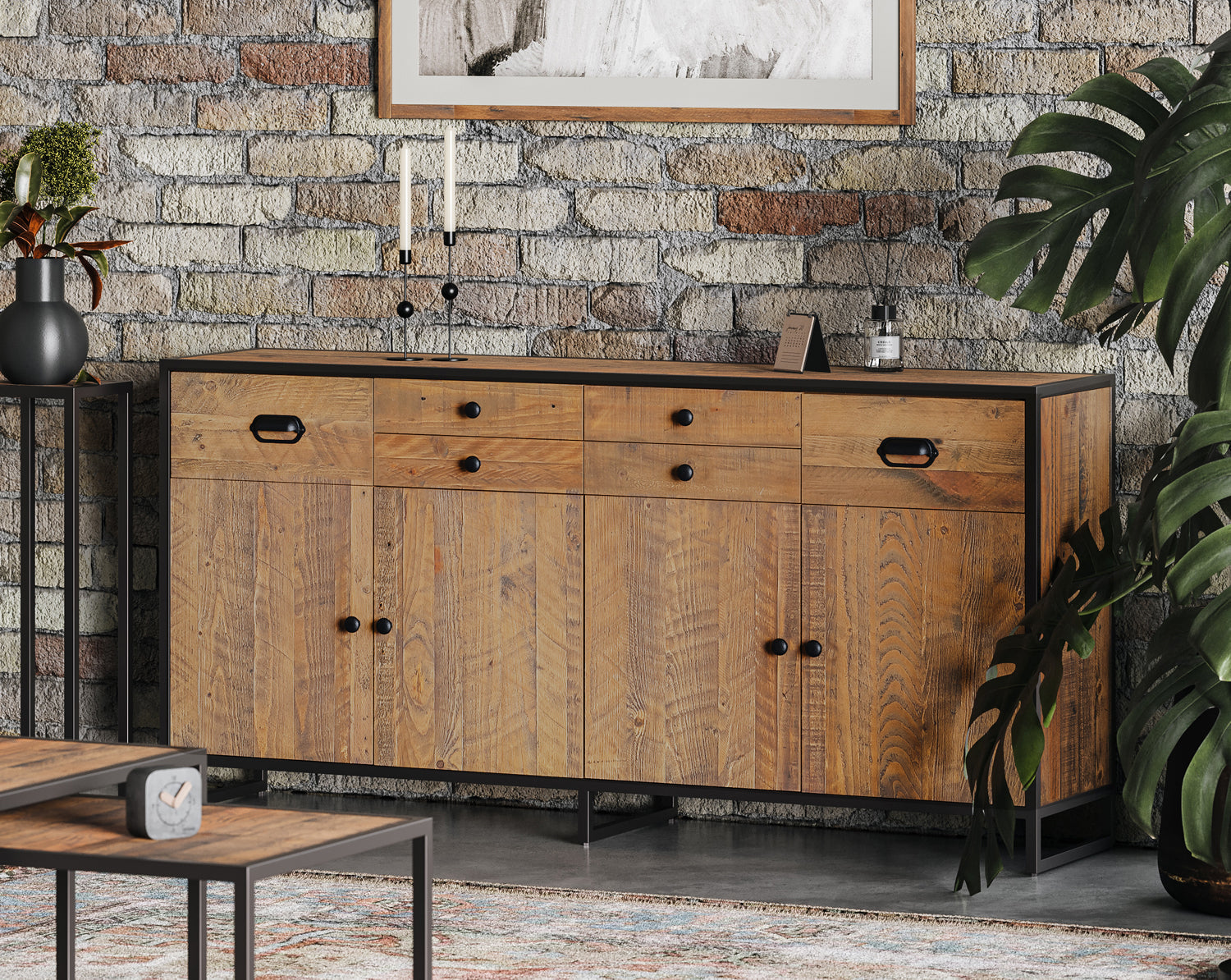
The Brooklyn Oak Sideboard is the warm, storage-led option. The product has a solid oak construction, industrial-style metal legs, a rustic finish, two cupboards with shelves and three drawers. Sized at 76 x 150 x 45cm, which gives it a strong presence without feeling oversized in a medium-sized room.
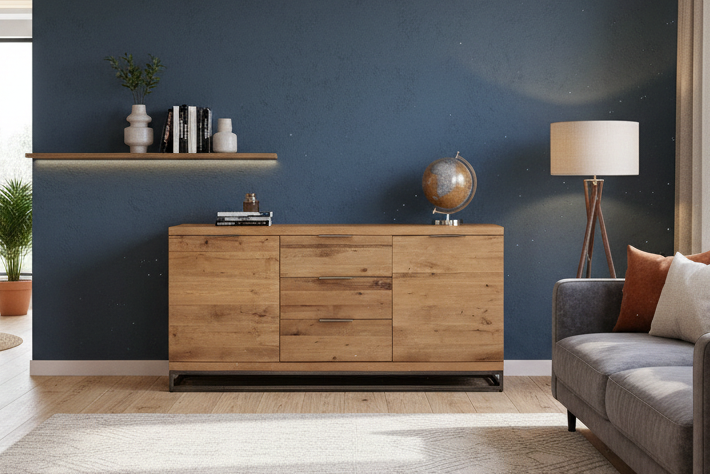
Best for: dining rooms that need proper storage and a grounded timber-led look.
Choose a wider sideboard when the room needs both storage and presence.
Murano Compact Sideboard - Matt Black
The Murano Compact Sideboard - Matt Black is the neatest, most compact-feeling option in this edit. The product details show sculpted fronts and brushed gold accents, and the size is 80 x 80 x 30cm. That shallow depth makes it especially useful where space is tight.
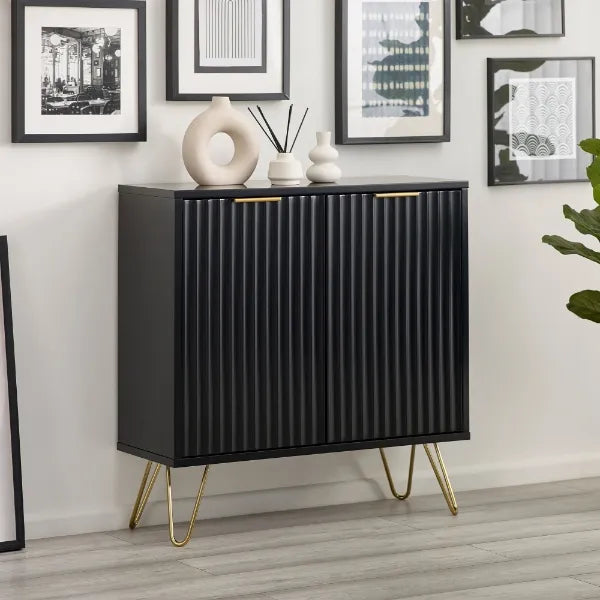
Best for: hallways, narrow walls or smaller living rooms where you need storage without a bulky silhouette.
Smaller spaces usually need a slimmer sideboard with a cleaner outline.
Louis Fluted Sideboard - Black
The Louis Fluted Sideboard - Black is the strongest statement piece in the range. The product description highlights a matt black finish with fluted and curved detailing, and the size is 80 x 142 x 40cm. It gives you a more decorative silhouette while still keeping the storage format practical.

Best for: rooms that need a darker focal point with a more decorative finish.
A darker sideboard can still feel balanced if the room has lighter textures around it.
Signature Blue Sideboard / Servery
The Signature Blue Sideboard / Servery has a more handcrafted feel. The product details show an oak parquet top, a hand-finishing process, a thin layer of white paint that is hand-rubbed back, a clear lacquer finish and dimensions of H80 x W110 x D48cm.
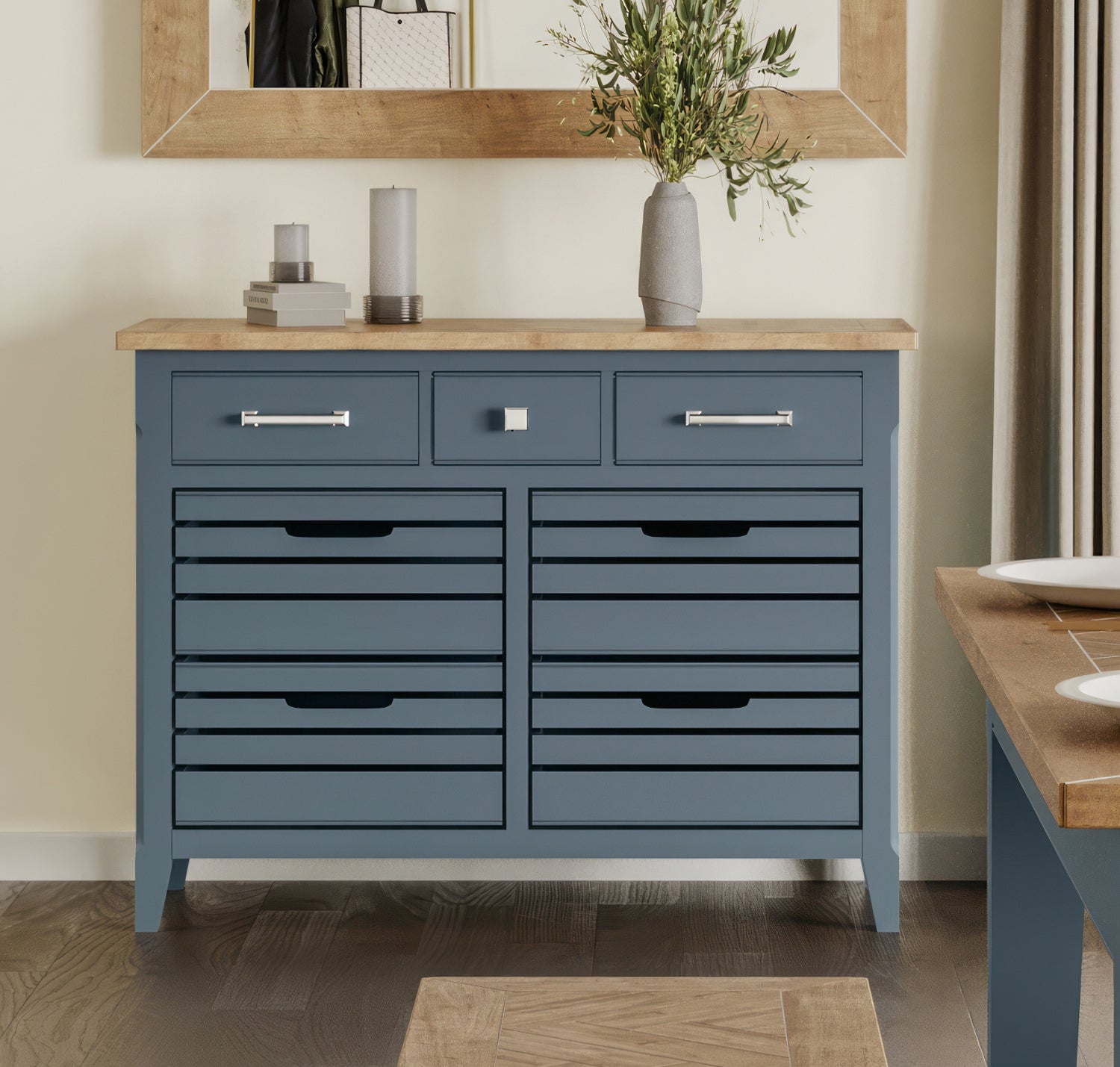
Best for: dining or living spaces where you want storage that still feels decorative and characterful.
If you want a softer, more heritage-led feel, the living collection is a useful place to continue browsing once you have chosen the sideboard style.
The right sideboard should match the room’s scale before it matches the décor.
Style a sideboard in a dining room
The dining room is often the most natural home for a sideboard. It keeps serving pieces, tableware, candles and linens close to hand, and it gives you a surface that can finish the room without making it look busy.
Our favourite approach is straightforward: let the sideboard act as the calm background piece, then style the top with one main lamp, a mirror or artwork, and a small number of decorative objects. That creates shape and height without making the room feel crowded.
The Brooklyn Oak Sideboard works especially well in this setting because the rustic finish and 150cm width give the room warmth and enough scale to feel balanced against a dining table. It is the sort of piece that makes a dining area feel complete rather than simply furnished.
Dining room styling formula: sideboard + mirror + lamp + tray + one low object. That is usually enough to feel finished without looking overcrowded.
If you are furnishing the full room, link the sideboard to your main dining anchor with our dining tables collection. The space will feel more deliberate if the pieces share a similar tone, finish or material family.
A dining-room sideboard should support hosting, not compete with the table.
Use a sideboard in a hallway or open-plan room
A sideboard does not have to live in the dining room. In a hallway, it can act as a landing zone for keys, bags and everyday items. In an open-plan room, it can help create a visual boundary without needing a wall or screen.
That is where the Murano Compact Sideboard - Matt Black becomes especially useful. At 80 x 80 x 30cm, it keeps the footprint tight, while the sculpted fronts and brushed gold accents give it enough detail to feel styled rather than purely functional.
Hallway styling formula: sideboard + shallow bowl + lamp + framed print. Keep it compact so the room still feels easy to move through.
For a more dramatic open-plan look, the Louis Fluted Sideboard - Black creates a stronger focal point. The 142cm width is substantial enough to hold the wall visually, while the matt black finish and fluted detailing stop it from feeling flat.
Open-plan styling tip: use a sideboard to make one zone feel anchored. A darker fluted piece can visually bridge dining and living areas without making the room feel closed in.
For more wall-hugging pieces and everyday storage routes, our hallway furniture collection is a natural companion to sideboards in compact or multipurpose homes.
In open-plan rooms, a sideboard can define a zone without blocking the flow.
What to put on top without over-cluttering it
The easiest way to ruin a sideboard is to treat the top like spare storage. Instead, think of it as a display surface with a job to do. It should add height, texture and personality, but still leave some breathing room.
We usually recommend one of these three styling directions:
- Calm and timber-led: a ceramic lamp, a simple bowl, one framed print and a small stack of books.
- Modern contrast: a black or brass lamp, a ribbed vase and a monochrome artwork above the sideboard.
- Relaxed heritage: a table lamp with a softer shade, a tray for candles or matches, and one or two personal objects.
The rule is to vary height and texture, but keep the number of pieces controlled. Negative space matters. The sideboard itself should still be the star of the show.
The Signature Blue Sideboard / Servery is a good example of a piece that can carry styling without disappearing behind it. The oak parquet top and hand-finished surface already bring enough character, so the styling only needs to sharpen the mood rather than do all the work.
Best practice: leave around one-third of the top relatively clear. That small amount of restraint makes the whole piece feel more premium.
Less on top usually makes the sideboard look better, not emptier.
Keep it practical every day
Sideboards work best when they genuinely make day-to-day life easier. That means choosing the right storage for the things that tend to clutter a home: chargers, table linens, candles, paperwork, games, serving pieces and spare glassware.
In a dining room, a sideboard can act as a serving station when you are hosting. In a hallway, it becomes a drop zone that prevents everyday items from spreading across the house. In a living space, it can hide the less photogenic bits of real life while still giving the room a polished finish.
The Brooklyn Oak Sideboard is particularly useful for this because the two cupboards and three drawers create a proper storage system, not just a decorative façade. It gives you a clear place for larger items and smaller bits that would otherwise drift around the house.
For smaller or narrower spaces, the Murano Compact Sideboard - Matt Black shows how you can keep the room efficient without sacrificing style. Its smaller footprint means it can solve a storage problem without taking over the room.
The most useful sideboards make storage feel effortless in everyday life.
Frequently Asked Questions (FAQs)
Q: What is the main purpose of a sideboard?
A: A sideboard gives you storage and display space in one piece. It helps keep a room tidy while also adding a strong visual anchor.
Q: What should I put on top of a sideboard?
A: Keep it simple: a lamp, a mirror or artwork, and one or two decorative pieces. The goal is to create height and interest without filling every inch.
Q: Can a sideboard work in a hallway?
A: Yes. A slimmer sideboard is ideal for hallways because it gives you storage and a surface without taking too much floor space.
Q: How do I stop a sideboard looking cluttered?
A: Limit the number of items on top, repeat one or two materials, and leave some open space so the sideboard itself can still breathe.
Q: Which Oakavia sideboard is best for a smaller room?
A: The Murano Compact Sideboard - Matt Black is the easiest starting point if you need a smaller footprint and a neat silhouette.
Q: Which Oakavia sideboard is best for a dining room?
A: The Brooklyn Oak Sideboard is a strong fit for a dining room because it offers generous storage and a warmer timber-led look.
Q: Is a dark sideboard too heavy for a room?
A: Not if the rest of the room has lighter textures, soft lighting and a bit of negative space around the piece. Dark finishes can feel very refined.
Q: Can a sideboard help with open-plan zoning?
A: Yes. A sideboard can visually separate dining and living areas while still keeping the space open and practical.
Q: Do sideboards need to match the dining table?
A: They do not need to match exactly, but they should feel related. Similar tones, materials or finishes help the room feel cohesive.
Q: What makes the Signature Blue Sideboard / Servery different?
A: It has a handcrafted feel, an oak parquet top and a more decorative finish, so it works well when you want storage that also feels like a feature piece.


