
Small Space Storage Solutions: The Complete Guide to Maximising Your UK Home
⏱ Estimated reading time: 23 minutes

Introduction: Rethinking What's Possible in Your Compact UK Home
Living in a small space isn't a limitation; it's an opportunity to be more intentional about what you bring into your home. Whether you're in a Victorian terraced house in Manchester, a micro-apartment in London, or a downsized property in Birmingham, the challenge of limited square footage can spark creativity rather than constrain it. The psychological impact of small spaces is real: cluttered environments can elevate stress levels, reduce productivity, and make homes feel cramped rather than cosy. But the right small space storage solutions can transform how you experience your home, creating not just physical order but mental clarity too.
What separates effective storage from forced compromise is thoughtful design that serves multiple purposes without sacrificing style. This guide will walk you through a complete methodology for maximising every inch of your UK home, from initial space assessment through to selecting the perfect furniture. You'll learn how to think like an interior designer, identifying opportunities in awkward corners, under-stairs spaces, and vertical planes that often go overlooked. Most importantly, you'll discover how modular storage systems can adapt to your evolving needs—whether you're renting and need non-permanent solutions, or you're a homeowner investing in pieces that will grow with you.
The UK's housing landscape presents unique challenges: period properties with sloping ceilings, narrow Victorian hallways, and modern builds where every centimetre counts. Throughout this guide, we'll address these specific considerations, ensuring the advice is genuinely applicable to your situation. By the end, you'll have a clear blueprint for creating a home that feels spacious, organised, and distinctly yours—all without moving house.
Assess Your Space: The Foundation of Smart Storage

Before purchasing a single piece of furniture, you need to understand exactly what you're working with. A thorough space assessment prevents costly mistakes and ensures every investment serves a purpose. This phase is about gathering data, not making decisions—approach it with the curiosity of an architect surveying a building.
Take Precise Measurements
Start by measuring each room accurately. Use a tape measure and record: room dimensions (length, width, ceiling height), window positions (height from floor, width, distance from corners), door openings (including which way they swing), radiator locations, and any permanent fixtures like fireplaces or built-in cupboards. Don't forget to measure hallways and staircases if you'll need to deliver large items; a beautiful piece won't help if it can't reach its intended room.
Create a simple scaled drawing or use free online room planners. Digital tools allow you to test furniture placements before committing. When measuring, include existing furniture you plan to keep, noting its dimensions and position. For awkward spaces—under sloping eaves, bay windows, or between pipes—measure those challenging nooks separately. These often-overlooked areas can become your most valuable storage real estate.
Inventory Your Belongings

The second critical step is taking stock of what you actually own. Go through each category systematically: clothing, books, entertainment media, kitchen equipment, linens, and sentimental items. Be honest about what you need versus what you're holding onto "just in case." The minimalist philosophy of "have nothing in your house that you do not know to be useful or believe to be beautiful" applies particularly powerfully to small spaces.
Create a list by room, noting which items must stay in specific locations (like your bed in the bedroom) versus which could be relocated. For example, storing seasonal bedding in the hallway while keeping everyday items in the bedroom might free up valuable wardrobe space. Group similar items together; this reveals patterns in your storage needs, such as whether you require more hanging space, shelving, or drawer capacity.
Zoning: Define How Each Space Functions

In small homes, rooms often need to serve multiple purposes. A living room might double as a home office; a bedroom may need to accommodate clothing storage, reading materials, and personal items. Define the primary and secondary functions for each room, then allocate storage accordingly. Your bedroom, for instance, should prioritise clothing storage and bedtime essentials; living areas need solutions for books, media, and decorative items.
Consider traffic flow when planning storage. You should be able to move through a room without navigating around obstacles. This is particularly important in narrow hallways or small bedrooms where every step counts. Keep main pathways clear and position storage where it supports rather than hinders movement.
Layout Principles That Make Small Spaces Feel Larger
Once you understand your space and needs, you can apply fundamental design principles that maximise both storage and perception. These strategies work together to create rooms that feel organised and spacious, even when they're physically modest.
The Vertical Advantage: Look Up
Wall space is the most underutilised storage area in small UK homes. Floor-to-ceiling shelving, wall-mounted cabinets, and tall, narrow units draw the eye upward, creating the illusion of height. In rooms with low ceilings, this vertical emphasis actually makes the space feel taller by directing attention away from the constraint. For hallways or narrow walls, consider slimline shelving that's perhaps only 20-30cm deep—perfect for books, decorative objects, or storage boxes without protruding into the walkway.
When installing wall-mounted solutions, check your property's restrictions—renters typically need damage-free options like tension poles or freestanding tall units. Homeowners can take advantage of stud walls or masonry for heavier installations. Always respect building regulations; in period properties, certain walls may be load-bearing or protected, requiring professional assessment.
Wall-mounted storage maximises vertical space without consuming floor area, making it ideal for narrow hallways and small rooms where every centimetre counts.
Multi-Functional Furniture as Your Secret Weapon
 Signature Blue Coffee Table With Drawers & Hidden Storage Trunk
Every piece in a small space should earn its keep by performing at least two roles. A coffee table with concealed storage housing blankets and board games; a bed with under-drawer space; a console table that combines shelving with a workspace. The most effective multi-functional pieces feel intuitive; you shouldn't need to think about how to use them; their secondary functions should reveal themselves naturally through daily use.
When evaluating multi-functional furniture, consider how it will integrate into your routine. A storage ottoman in the living room that doubles as extra seating when guests arrive, while conveniently hiding clutter, is more valuable than a specialised piece that only solves one problem. Look for designs where the storage component is fully accessible without removing cushions or disassembling the piece—convenience determines whether you'll actually use it.
Traffic Flow and Clear Pathways
A room crammed with storage furniture can feel more claustrophobic than one with less but better-placed pieces. Maintain at least 70-80cm of clear width in primary walkways; narrower than this creates a bottleneck effect. Position taller storage against walls rather than in the centre of rooms, and avoid placing furniture directly in front of windows where possible—natural light is psychologically expanding.
In narrow hallways, consider wall-mounted solutions that don't protrude into the walking path. A slim console table with drawers, for example, can provide valuable storage while allowing free movement. If your hallway is particularly tight, vertical storage—tall, narrow cabinets or a shoe rack that stacks upward—preserves every precious centimetre of floor space.
Visual Tricks That Create Space Perception
 Ankara Oak Parquet Large 1.8m Dining Table
Colour, lighting, and material choices significantly impact how spacious a room feels. Light colours on walls and floors reflect light, making rooms appear larger. Mirrors strategically placed opposite windows bounce natural light around the room. Furniture with exposed legs, rather than solid bases, creates sightlines through to the floor, enhancing airiness. Glass-fronted cabinets reduce visual weight compared to solid wood.
But don't assume small spaces must be pale and minimalist. Deep colours can add intimacy and sophistication to a small room when used intentionally, such as on a single feature wall or in a well-lit space. The key is moderation: use bold colours sparingly and balance with lighter elements to maintain an open feel.
Room-by-Room Storage Solutions
Every room presents unique challenges and opportunities. Let's explore practical, space-saving approaches for each area of your UK home, with specific product recommendations that demonstrate how quality furniture can solve these problems elegantly.
 Padstow Ottoman 150Cm King Bed - Oakavia
Bedroom: Your Personal Sanctuary of Order
The bedroom is where storage challenges are most acute. Between clothing, bedding, personal items, and reading materials, bedrooms accumulate clutter quickly. The solution lies in combining dedicated storage furniture with smart organisational habits.
Storage beds represent one of the most efficient uses of small bedroom space. Rather than dedicating floor area to a separate chest of drawers, an ottoman or divan bed with built-in storage reclaims what would otherwise be dead space beneath the mattress. Look for models with strong, smooth hinges and adequate depth—ideally at least 30cm—to store bulky items like seasonal bedding, spare pillows, or out-of-season clothing.
For clothing storage beyond the bed, consider narrow wardrobes or modular systems that can be configured to your exact needs. If your bedroom is particularly compact, a 2- or 3-door wardrobe might be the maximum width you can accommodate. Within the wardrobe, maximise vertical space with adjustable shelves and hanging rails at two heights—one for longer garments, one for shirts and dresses. Drawer organisers prevent smaller items like socks and accessories from becoming chaotic.
The Padstow Ottoman Bed exemplifies space-efficient bedroom storage, offering lift-up storage beneath the mattress while maintaining sophisticated design with rattan detailing and warm oak finish.

Nightstands with storage deserve more attention than they typically receive. In small bedrooms, every surface counts. Choose bedside tables with at least one drawer—this is where you'll likely store items you currently keep on top of the unit, freeing valuable surface space for a lamp and perhaps a small stack of books.
For bedrooms that need to accommodate work or study, consider a wall-mounted desk or a compact writing table that can be folded away when not in use. If your space cannot accommodate a full desk, a slim console table against a wall provides a surface for essentials without overwhelming the room.
Living Room: Stylish Storage That Impresses

Ooki Large Open Bookcase - Oakavia
The living room is where you entertain guests and relax as a family, so storage solutions need to be both practical and presentable. Nothing undermines a carefully decorated living space like visible clutter—remote controls, gaming consoles, magazines, and blankets have a way of accumulating.
A storage coffee table is often the centrepiece of smart living room storage. Models with one or more drawers can hide away remotes, charging cables, and small items that would otherwise create visual noise.
For book lovers, open bookcases remain indispensable. The Ooki Large Open Bookcase combines storage and display elegantly. At H190 x W75 x D35cm, it's tall enough to maximise vertical space while its narrow depth prevents it from protruding into the room. The two drawers provide concealed storage for items you don't want on display, while the open shelving showcases books and decorative pieces. Because Ooki units are modular, you can connect multiple bookcases side-by-side to create a feature wall if your space allows—this is particularly effective in open-plan living areas where you need to define zones.
The Ooki Large Open Bookcase combines storage and display elegantly. At H190 x W75 x D35cm, it's tall enough to maximise vertical space while its narrow depth prevents it from protruding into the room. The two drawers provide concealed storage for items you don't want on display, while the open shelving showcases books and decorative pieces.
Sideboards and cabinet units offer enclosed storage ideal for living rooms. A low cabinet with doors can hide away games, media equipment, and spare cushions while providing a surface for a television or decorative items. Look for models that are shallower than standard depth—around 35-40cm—so they don't protrude too far into the room. If your living room doubles as a dining space, a sideboard with both drawers and cupboards can store table linens, serveware, and dining essentials.
Hallway and Entryway: First Impressions Start Here

Sydney Shoe Cupboard - Oakavia
Narrow hallways present a particular storage challenge: you need somewhere to put shoes, coats, bags, and keys without blocking the thoroughfare. The key is vertical, slimline solutions that don't exceed the width of your walking path.
For shoe storage, narrow cabinets are specifically designed for tight spaces. The Sydney Shoe Cupboard (120 x 80 x 41cm) fits in narrow hallways while offering five shelves to keep shoes organised and out of sight. Its rattan-effect front adds visual interest, while the raised lip around the edge prevents shoes from sliding off. The natural oak effect finish complements a wide range of interior styles, from traditional to contemporary. It represents accessible priced storage that solves a common hallway problem elegantly
If your hallway is especially narrow—perhaps less than 80cm wide—consider wall-mounted coat racks with integrated shelving. These utilise vertical space without occupying floor width at all. A row of hooks at shoulder height accommodates coats and bags, while shelves above provide storage for hats, gloves, and baskets containing smaller items. Look for designs with a small shelf or ledge at the bottom where you can place keys or mail as you come in the door. This simple feature prevents these frequently-forgotten items from being misplaced.
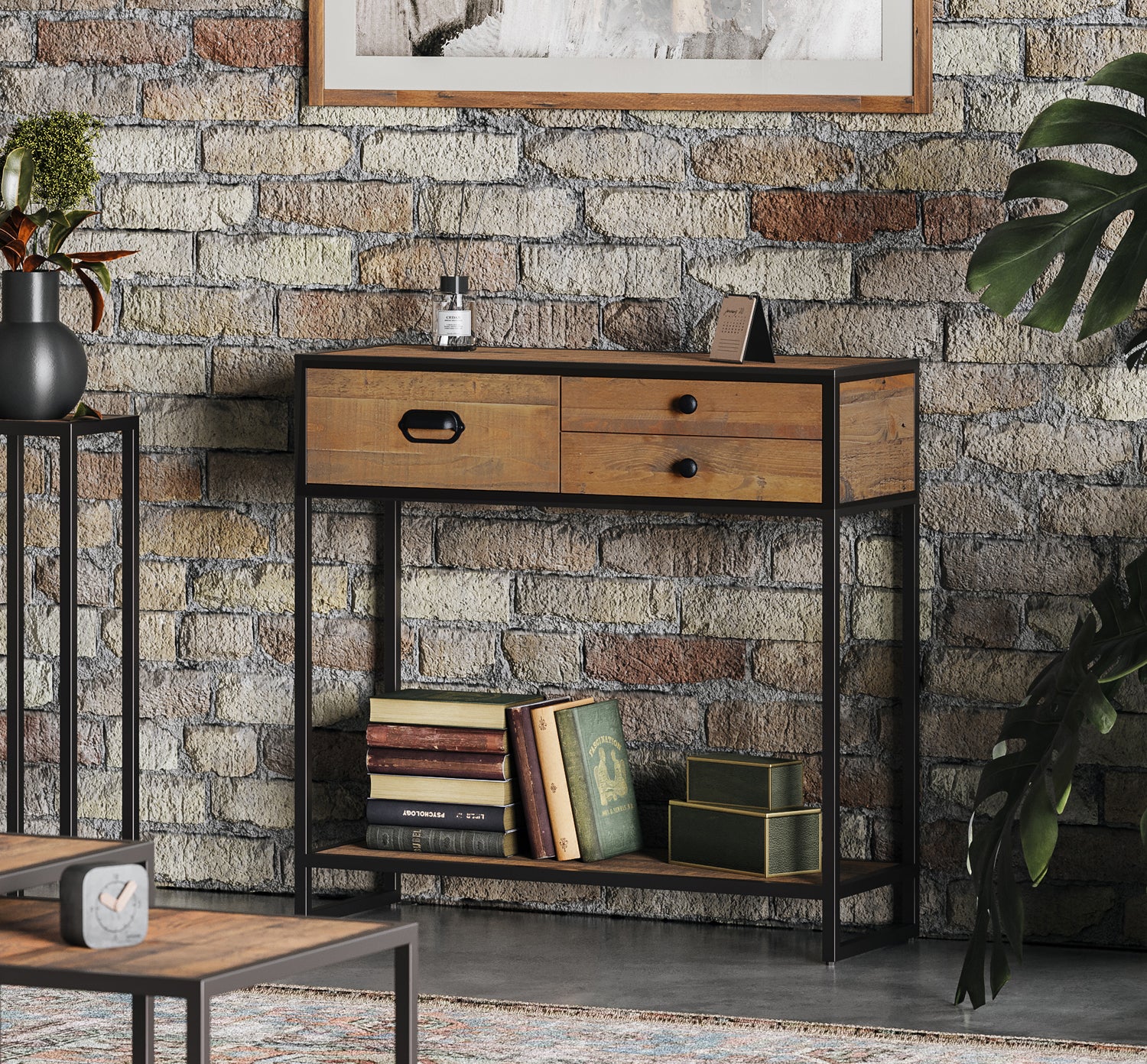
For even tighter spaces, a slim console table with drawers offers generous storage in a minimal footprint. Console tables with drawers provide a surface for keys, mail, and decorative items, while the concealed storage keeps essentials like gloves, umbrellas, and spare shopping bags handy but out of sight.
The Ooki Small Console Table provides a narrow storage solution perfect for hallways or behind sofas.
Home Office: Maximising Productivity in Minimal Space
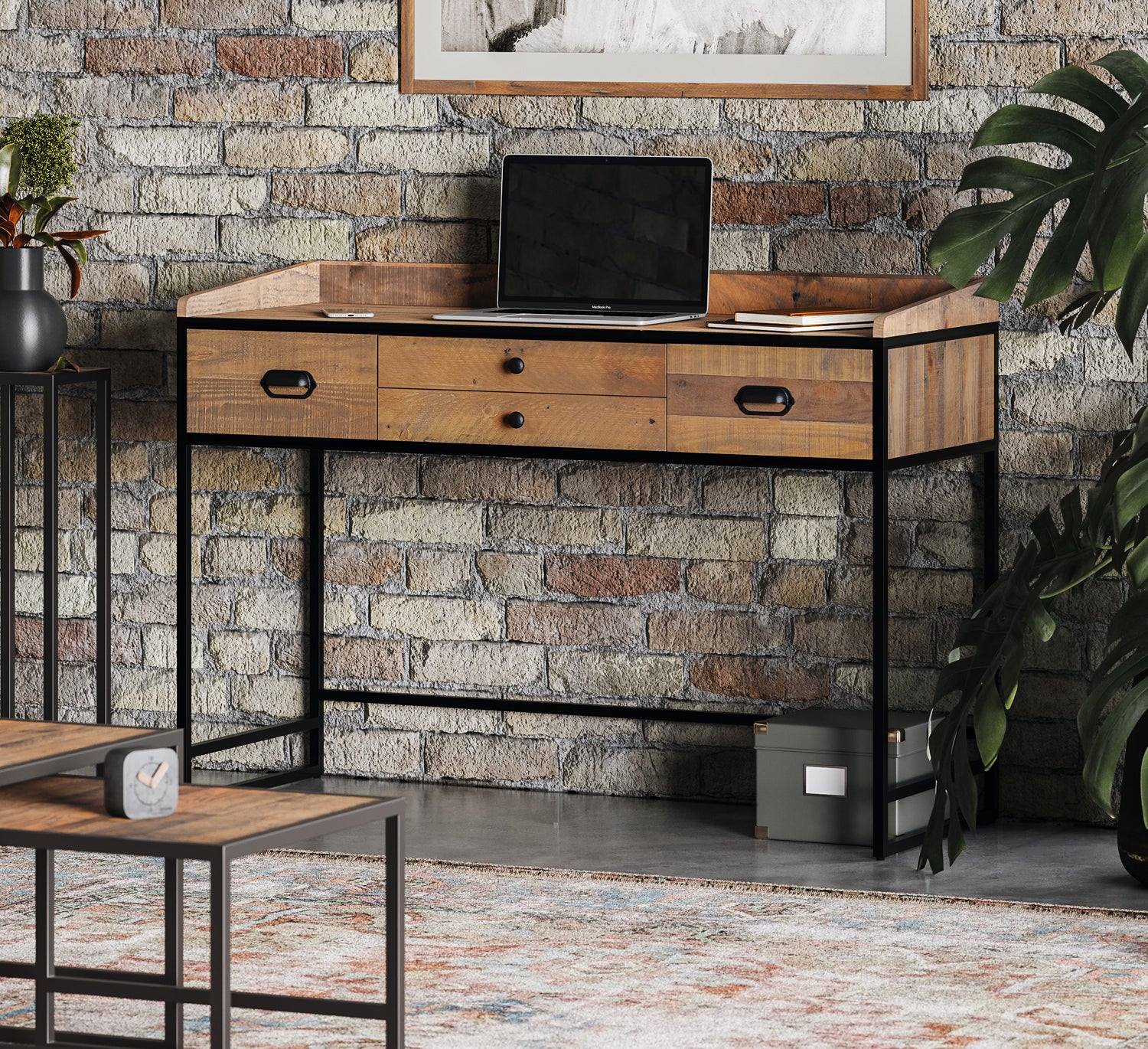
Ooki Desk/Dressing Table - Oakavia
Working from home in a small space demands ruthless efficiency. Everything in your home office should either be functional or inspiring—nothing else should earn a place. Whether you have a dedicated room or are carving out space in a living room or bedroom, storage solutions must be compact yet comprehensive.
A desk with integrated storage remains the gold standard. Look for models combining a work surface with drawers for stationery, files, and equipment. The Ooki Desk/Dressing Table serves this dual purpose beautifully. Its 122cm width provides adequate workspace for a laptop and papers, while the three standard drawers plus the lockable drop-down front offer versatile storage configurations. Use the drop-down drawer for items you need frequent access to—like pens, notepads, or charging cables—while deeper drawers accommodate files or equipment. At just 40cm deep, it doesn't protrude excessively into the room, making it suitable for shared spaces.
Wall-mounted shelving above the desk provides storage for books, reference materials, and decorative items without occupying the desk surface. Ensure shelves are installed at a comfortable height—not so high that you strain to reach items, but high enough that they don't interfere with headroom. Open shelving allows quick access, but consider adding baskets or boxes to contain smaller items and maintain visual order.
For paperwork, a filing cabinet or filing shelf may be necessary, depending on your work. Vertical filing systems store papers efficiently while taking up minimal floor space. If you can digitise most documents, you may only need storage for essential physical files. In this case, a small filing drawer integrated into your desk or a compact freestanding filing unit might suffice.
Cable management makes a disproportionately large impact on small office spaces. Use cable clips along the desk edge to route cables neatly, and consider a cable management box to conceal power strips and excess wiring. This attention to detail prevents the "spaghetti behind the desk" problem that can make even a tidy workspace feel chaotic.
Kitchen and Dining: Compact Living, Full Functionality
UK kitchens are often compact, especially in period properties and new-build flats. Maximising storage here requires creativity and specialised solutions that make the most of architectural constraints.
Wall-mounted shelving and racks are invaluable in small kitchens. Magnetic spice racks on the side of cabinets, hanging pot racks from the ceiling, and wall-mounted rails for utensils and pans all free up cupboard space for items that must be concealed. If your kitchen has an awkward corner or gap between units, narrow storage units—perhaps only 15-20cm wide—can fit into these spaces for storing spices, oils, or cleaning supplies.
 Urban Elegance - Reclaimed Extra Large Sideboard
For dining areas, consider furniture that doubles as storage. A sideboard or buffet table with drawers and cupboards can store table linens, serveware, and special occasion items while providing a surface for serving. If you have a dining table but limited space for chairs, consider stackable chairs or a bench that can be tucked under the table when not in use. Some benches even incorporate storage within the seat, offering dual functionality.
In open-plan spaces where the living room flows into the kitchen, a room divider with storage can help define zones while providing functional shelving. This might be a tall, narrow bookcase positioned perpendicular to the main wall, with storage on both sides accessible from either room.
The Ooki Modular Advantage: Furniture That Grows With You

What sets modular storage systems apart from traditional furniture is their adaptability. Unlike standalone pieces that serve a single purpose, modular units can be rearranged, expanded, or reconfigured as your needs change. For renters, this means you can create a custom storage solution without making permanent alterations to the property. For homeowners, it means your furniture investment can evolve as your life circumstances shift—children leaving home, new hobbies emerging, or working from home becoming permanent.
The Ooki Collection exemplifies modular design executed beautifully. All external timbers are 100% reclaimed, giving each piece character while supporting sustainability. The steel frames are hand-fabricated and finished for durability, and every component is designed to connect seamlessly with other Ooki units. This means you can start with a single bookcase and later add adjoining units to create a comprehensive storage wall. Need more drawer space? Add a drawer module. Want to create a built-in bookshelf effect? Connect multiple open bookcase units.
 Ooki - Modular Tall With Doors / Drawers / Shelves
The collection's versatility shows in its range. Alongside the Large Open Bookcase and Coffee Table with Four Drawers, the Small Console Table provides a narrow storage solution perfect for hallways or behind sofas. All share the same design language—reclaimed timber with visible nail holes and scars that tell the wood's story, complemented by robust steel framing. This creates a cohesive look even if you acquire pieces gradually over time.
What makes Ooki particularly suited to small spaces is the thoughtful consideration of proportions. Units aren't overly bulky; they provide substantial storage without overwhelming rooms. The 5-year guarantee reflects confidence in construction quality—this isn't disposable furniture but heirloom-quality pieces designed to last a lifetime. For small space dwellers who might move multiple times, this longevity is crucial; you want furniture that can adapt to new floor plans rather than become obsolete.
Case Study: Transforming a One-Bedroom Flat
Consider a typical UK one-bedroom flat of around 50 square metres. The living room doubles as a home office and entertainment space; the bedroom must accommodate substantial clothing storage in minimal square footage. Using Ooki modular units strategically can transform such a space.
In the living room, the Ooki Large Open Bookcase placed against the longest wall creates a feature while providing storage for books, media, and display items. Connect a second unit to expand the storage wall, using the combined lower drawers for games, cables, and blankets. The Ooki Coffee Table with Four Drawers serves as the room's centre point, concealing clutter while providing a surface for drinks and everyday items. The modular nature means if the flat layout changes—perhaps you move the sofa to create a clearer pathway—you can detach one bookcase unit and reposition it elsewhere, such as in the bedroom.

Ooki Coffee Table with Four Drawers - Oakavia
In the bedroom, the Ooki Desk/Dressing Table provides a dual-purpose surface: use it as a dressing table with a mirror above, or as a compact workspace with laptop and documents. Its drawers store everyday clothing items like underwear, socks, and accessories that don't need hanging. Combined with a storage bed like the Padstow Ottoman, you have a comprehensive storage system without a single freestanding wardrobe—ideal for a room where every centimetre counts.
When to Choose Reclaimed Wood
Oakavia's emphasis on reclaimed timber throughout the Ooki range and in pieces like the Trinity Reclaimed Small Console Table speaks to a wider trend in UK furniture buying: sustainability matters. Urban professionals in their 25-45 years increasingly seek out furniture with environmental credentials. Reclaimed wood isn't just eco-friendly—it offers aesthetic qualities that new timber can't match. Each piece carries its history in nail holes, saw marks, and weathered patches, creating furniture that feels inherently unique.
For small space dwellers who plan to stay put for several years, reclaimed furniture makes a statement about values while providing durable, characterful pieces. The Trinity console table, with its open design showing the timber's history, becomes a conversation piece—not just storage but art. This aligns with the psychographic of Oakavia's target audience: design-conscious, environmentally aware, and willing to invest in quality over disposable furniture.
Modular storage systems like the Ooki collection offer unmatched flexibility for small spaces. Start with the pieces you need now, then expand as your requirements change—no need to replace entire furniture sets.

Common Mistakes That Undermine Small Space Storage
Even with the best intentions, small space storage can go wrong. Recognising these pitfalls before they happen saves you from expensive errors and ongoing frustration.
Buying Before Measuring
The most fundamental error is purchasing furniture without verifying that it will fit. This seems obvious, yet it happens constantly—someone falls in love with a piece, brings it home, and discovers it either won't fit through doorways or overwhelms the room. Always measure twice: first your space (room dimensions, available wall area, clearance needed around the piece), then the furniture (including any protruding handles or overhanging shelves). Don't forget to measure staircases and lifts if you live in a flat.
Choosing Style Over Substance
A beautiful piece that provides insufficient storage solves nothing. Be ruthless about prioritising functionality in storage furniture. If a stunning cabinet has shallow drawers that can't accommodate your belongings, it's the wrong choice. Assess your actual storage needs first—what dimensions do you need? What capacity? Then find the most aesthetically pleasing option that meets those requirements.
Ignoring Clear Height
In small spaces with sloping ceilings (common in lofts and top-floor flats), vertical clearance is critical. A tall bookcase might look perfect against a wall until you discover that, due to a sloping ceiling, only the top 120cm can be full-height, while the remaining space tapers. In such cases, customisable shelving systems or modular units that can be configured to fit awkward heights become invaluable.
Overlooking Door Swing and Access
A wardrobe or cabinet placed where its door blocks a necessary pathway creates ongoing frustration. When planning furniture placement, consider the arc of door swings and whether they'll impede movement or interfere with other furniture. For tight spaces, sliding doors or cabinet fronts that open fully without handles (push-latch systems) can save precious centimetres.
Forgetting About Maintenance
Storage solutions that are difficult to access or maintain will inevitably fall into disuse. Pull-out drawers that stick, shelves that are too deep to reach into, and boxes that must be completely emptied to access items at the bottom—all these create friction that discourages organisation. Choose systems with smooth-running drawers, adjustable shelving at heights you can comfortably reach, and transparent containers or labelling systems for items stored out of sight.
Maintenance and Longevity: Protecting Your Investment

Quality storage furniture represents a significant investment, particularly for small-space dwellers who typically purchase fewer but better pieces. Proper maintenance ensures these investments last for years while continuing to serve their purpose effectively.
Daily Care Routines
Establish simple habits that prevent storage areas from becoming dumping grounds. At a minimum, return items to their designated homes daily. A five-minute evening reset—returning cushions, clearing surfaces, filing paperwork—prevents clutter from accumulating. This is particularly important in small spaces where visual order impacts mental wellbeing more acutely than in larger homes where mess can be hidden away.
For wooden furniture, use appropriate cleaning products rather than harsh chemicals that can damage finishes. Ooki pieces with lacquered reclaimed timber can be wiped with a slightly damp cloth and dried immediately—avoid soaking or leaving water spots. (Follow manufacturer guidance to preserve material integrity)
Seasonal Reassessment
Your storage needs change with the seasons and life circumstances. Every three to six months, evaluate whether your current systems still serve you. Are there items you consistently struggle to find? Do certain areas attract clutter because they lack adequate storage? Use these insights to adjust—perhaps adding dividers to drawers, acquiring additional storage boxes, or reconfiguring modular units.
Rotating seasonal items is key to maintaining efficient storage. Store off-season clothing, bedding, and accessories in less accessible spaces (under beds, high shelves, or storage boxes at the back of wardrobes) while keeping current-season items at easy reach. This prevents overcrowding and makes it simpler to locate what you need daily.
When to Expand or Adapt
Modular systems like Ooki are designed for evolution. If you find yourself running out of drawer space, add another drawer module. If your book collection grows, connect an additional bookcase unit. This scalability means you don't need to replace entire storage systems; you can simply augment them. For renters, this is particularly valuable—you can create a comprehensive storage solution without permanent installation, then disassemble and reassemble when moving.
Consider the long-term compatibility of any modular system you invest in. Ensure new units use the same connection mechanisms as existing pieces so they integrate seamlessly. Oakavia's Ooki collection maintains consistent design language and hardware across all units, so any Ooki piece combines with any other—this future-proofs your investment.

Conclusion: Small Space, Big Possibilities
Maximising storage in a compact UK home isn't about cramming items into every available nook; it's about intentional design that creates spaciousness through order. The process starts with understanding your specific constraints and needs, proceeds through thoughtful planning incorporating proven layout principles, and culminates in furniture selections that serve multiple purposes without compromising on style.
The products featured—from the Ooki collection's modular units to the Padstow Ottoman bed, Sydney Shoe Cupboard—demonstrate how purpose-designed furniture solves small space challenges elegantly. Each incorporates features useful specifically for compact living: vertical proportions that maximise height, integrated storage that reclaims otherwise dead space, and designs that maintain visual lightness rather than visual bulk.
Remember that small space storage is an ongoing practice, not a one-time fix. As your life evolves—new hobbies, changes in work arrangements, additions to the household—your storage needs will shift. The advantage of a well-designed system, particularly modular approaches, is that it can adapt with you. Start with the fundamentals covered in this guide, then refine and expand as needed.
Your home should feel like a sanctuary, not a storage constraint. With the right approach, even the most modest UK property can provide the storage, style, and spaciousness you desire. The key is starting with a clear assessment, choosing quality pieces that serve multiple purposes, and maintaining the discipline of regular organisation. Your future self—coming home to a calm, orderly space—will thank you for it.
Frequently Asked Questions (FAQs)
Q: How do I maximise storage in a small UK bedroom?
A: Focus on vertical storage with tall, narrow wardrobes, use under-bed storage containers, choose a storage bed with drawers, and utilise door-mounted organisers. Keep only what you need within easy reach and store seasonal items out of sight.
Q: What furniture works best for small living rooms?
A: Look for multi-functional pieces like storage coffee tables, wall-mounted shelves, slim console tables, and modular seating with hidden storage. Choose furniture with exposed legs to maintain visual openness, and consider pieces that can serve dual purposes (e.g., a desk that doubles as a console).
Q: Are modular storage systems worth the investment?
A: Yes, modular systems offer long-term value because they adapt as your needs change. You can start with the essentials and add units later without replacing everything. For renters, modular furniture can move with you and reconfigure to new spaces. The initial investment is higher but pays off through versatility and longevity.
Q: How can I create more storage in a narrow hallway?
A: Use wall-mounted coat racks and shelving, install a slim shoe cabinet (no wider than 40cm), add a narrow console table with drawers, and consider vertical storage that goes up rather than out. Keep floor space clear to maintain a sense of openness.
Q: What's the best way to organise small kitchen storage?
A: Maximise wall space with magnetic spice racks, hanging pot racks, and rail systems for utensils. Use stackable containers inside cupboards, install pull-out shelves in deep cabinets, and add narrow storage units in awkward gaps between appliances. Keep countertops clear to maintain the illusion of space.
Q: How do I choose the right size furniture for a small room?
A: Measure everything—room dimensions, existing furniture, and the piece you're considering. Leave at least 70–80cm for walkways. Opt for furniture with a smaller footprint (e.g., 40cm deep instead of 60cm), and choose pieces with visual lightness (exposed legs, light colours, glass elements). Create a floor plan before buying.


